
Historical Plenty Buildings
Timeline of ‘Nilgiris’ Property – 183 Yan Yean Road, Plenty
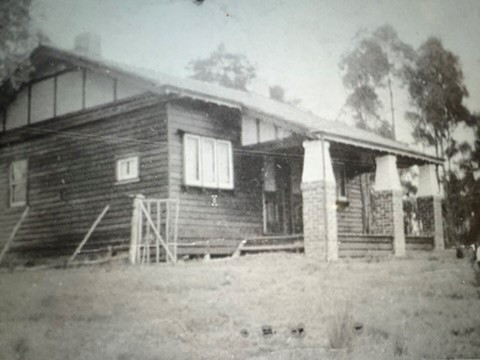

Yan Yean Rd was once a significant songline traversed by indigenous people as it followed the ridge line on top of two valleys. This songline became tracks for horses and cart with white settlement, and later roads. Wurundjeri and other peoples could have walked along the songline between camps on the Plenty River (Partington Flats – where Batman Treaty was likely to take place) and Kinglake Ranges. The words ‘yan yean’ loosely translate to young men – as it was the songline taken by young men walking to their initiation site of the current reservoir.
The Plenty subdivision occurred through the Parish of South Morang settled lots of land in 1913, and many lots became assigned to the Returned War Servicemen scheme. The Nilgiris property was purchased in 1917 by Charles Webber Snr. (Harbour-Master, Williamstown) as a 6-acre lot – possibly for a bargain as the land had already been on the market for 4 years after first subdivision of Plenty township.
In 1919 Charles Webber Jnr returns from World War I service – initially enlisted as a Naval Serviceman who was involved in the first “contact” of Australians against Germans in Papua New Guinea and was very lucky to come out unscathed – having gone left when the other group went right. He then transferred over to the Infantry and served in France. He returned to build the house on the Plenty property and set up a mechanics garage in Greensborough.
in 1926 Charles Webber Jnr moves to Albert Park and sells the property to John (Jack) Edgcumbe. The property is advertised as “splendidly built hard wood bungalow, 4 rooms and all conveniences, 6 acres land with garage, sheds, poultry pens.”
John Edgcumbe was a returned serviceman living in Werribee. John’s family had deep ties to Healesville and built Edgcumbe’s Hotel — later known as the Grand Hotel. He came to Plenty with his mother Eliza and sister Erica, a dedicated Presbyterian nurse who had just missed active service at the end of WWI and later served in India. It’s likely she gave the property its name — Nilgiris — inspired by the blue-hazed mountains of southern India, which the Dandenongs gently echoed.
John Edgcumbe older brother, James Edgcumbe was an accountant who was in the first Melbourne enlistment to leave Port Melbourne in 1914. Confirmation by telegram that James was killed whilst still in the boat at the Gallipoli Landing at dawn on the 25th April, 1915. Records from an inquest recount a Lieutenant recalling that James had descended into a rowboat with some men he had enlisted with from the Carlton depot – mostly Essendon boys. All died in the gunfire whilst still in the water. Controversy had followed the hearing back in Essendon that so many boys from one place had been put in one boat – they rowed left whilst others rowed right.
John Edgecumbe, like many soldiers, returned from war with scars — not the visible kind. He suffered from what was then called “consumption” — tuberculosis — likely brought on by life in the trenches. Despite this, he threw himself into country life: breeding award-winning poultry, becoming involved in the Plenty Tennis Club, and even attempting to dig a tennis court in the hard clay before giving up. A dream half-buried, but never quite forgotten.
Tragically, John died in 1936, shortly after a broken engagement to a woman named Norma Ruttledge. We believe the addition of a third bedroom was for her — a future that never came to pass. He was laid to rest with his parents and sister in a single grave at the Melbourne General Cemetery, which has fallen in a sad state of disrepair, although the name ‘Edgecumbe’ is still recognisable.
In 1938 Nilgiris was purchased by Laurence Leslie Dunn, originally from the tin mining area of Tasmania but then to Sunbury, because – as family legend has it – he and Mrs Edgcumbe got along famously especially when he gushed over her favourite features in the garden. After being wed on the side of the alter in St Brendan’s Catholic Church in Flemington followed by a wedding breakfast in Warwick St, Ascot Vale, he and his newly-wed – a former primary school teacher – Eileen O’Connor, made their way up to Plenty to begin their new life together. Rumour also had it that he had neglected to mention to his newly wed that there were close to a thousand chicks needing attention in the incubator shed.
Ian remembers the original hearth being in the dining room with a cooker over the fire (“Bob”) then Wonderheat being put in heath with Laurie adding a drying rack with iron castings from a WWII plane cut to measure for clothes to dry over. Many an evening was spent with Laurie smoking a pipe his legs up on the brickwork whilst Eileen manoeuvred the clothes around for drying.
Laurie added the kitchen when Ian was a small boy – he can remember being lifted in a galvanised bucket up to the roof with his dad. Laurie also added glass houses, sheds and a tennis court – all done with his usual exuberance and enthusiasm – nothing done particularly well or without much planning – but all marked the passage of time! Eileen always used to remark to him that he had no sense of moderation! He was notorious for coming back from the tip with more than he took. He particularly liked the hardy fibreglass sheeting that was waterproof and weatherproof and provided excellent windbreaks all over his vegetable garden – turned out to be asbestos sheeting of course!
Laurie was a psychiatric nurse and had worked in many psychiatric institutions including Sunbury and Janefield. He would ride his bike — no gears — across the gorge to Mont Park, working with psychiatric patients and even convincing the hospital to let them build a cricket pitch. That iron-cast bell he salvaged from the hospital during a renovation was put on top of the Nilgiris water tower and used as a fire bell for the district. It now proudly sits outside the Plenty CFA.
Eileen only returned briefly to teaching, filling in at Plenty Primary during a teacher shortage but Nilgiris played host to a few primary school teachers looking for lodgings, just as Eileen has done when teaching up in the Wimmera and Mallee during the 1920s and 1930s. One of the teachers had got married whilst lodging locally, and Laurie walked her down the aisle.
Eileen put her teaching skills to good use, raising her three children – Peter, Margaret and Ian. In 1947, two families from Europe who were escaping the horrors of World War Two moved next door to Nilgiris. Two brothers married to two sisters brought the property with their children. Eileen helped one of the wives in particular, Eva, improve her English whilst Laurie got her tennis skills up to scratch!
The Jellineks became firm friends with the Dunns, a friendship which still continues now into the fourth generation, despite the last of them leaving Plenty in 2017. The only time there was any remembered friction between the families was when Laurie’s goat got into Eva’s vegie garden and when Ian enlisted to go to Vietnam.
Having returned from psychiatric nursing in 1971, Laurie made an excellent grandfather to his four grandchildren, popping them into wheelbarrows as he gardened or teaching them to play tennis. The tennis court was booked for the “tennis men” every Tuesday and Thursday afternoon – although in later years Winnie and Joan were both allowed to make an appearance.
Eileen passed away in her home of Nilgiris on the 8th December, 1997, aged 94. Her eldest grandchild – Annemarie – qualified as a primary school teacher two years later – following the footsteps of her grandmother. Laurie died on the 20th March, 2008 – on the eve of his 94th Birthday. His funeral took place in the gardens of Nilgiris – although recovering from the recent drought – he would have still been chuffed to be sent off from there.
In 2010 Nilgiris was purchased by Laurie’s grand-daughter Annemarie, and her husband Cameron, alongside their two sons Patric and Lachlan. They had the house restumped and re-plastered, keeping the original layout and size of the internal rooms.
In 2012 Nilgiris was awarded Nillumbik’s ‘Sustainable Home’ Award for its environmental impact which included recycling the existing house – including the original Tasmanian Oak floorboards, embedding foam insulation under the house between the joists and installing solar hot water and a roof heating ventilation system. A red box tree was removed from near the house – thought to be over one hundred years old and starting to lose it limbs – and a portable sawmill cut the wood into sizeable planks for drying in the old incubator shed.
In July 2018 some of the wood was returned as a beautiful dining table – its grain scarred with black from the iron nails hammered into its trunk years before when Laurie had installed crystals and a wind generator in its branches. Now the table sits in the dining room, the history of Nilgiris etched into its grains. In 2022, amidst the last COVID lockdown, the extension to the back of the house was complete. Containing concrete slab, northern windows, eaves to block summer sun but let in winter sun, wood burner against brick wall to maximise passive solar design.
The Dunn – Webb Clans hope to have many more years being spent around the table and in the property of Nilgiris.
Where are we?
Address: Plenty Historic Church
2 – 6 Memorial Drive, Plenty 3090
Phone Number: 03 9435 9117
Interested in joining the Plenty Historical Society? We would love to hear from you! Contact us here.